




































As Uganda prepares for its highly anticipated general elections in January 2026, the Electoral Commission has intensified voter education to ensure a transparent, inclusive, and credible process. With the introduction of enhanced verification technology and expanded polling logistics, the Commission is striking a balance between modernizing elections and safeguarding citizens’ constitutional rights to vote.
At the heart of the preparations is the Biometric Voter Verification System (BVVS), which will be deployed nationwide to authenticate voter identity at polling stations. Unlike electronic voting systems used in some countries, Uganda continues to use traditional paper ballots — a deliberate decision by the Electoral Commission to maintain the integrity and simplicity of vote casting. Voters will still mark their choices manually on paper ballots before placing them in ballot boxes — no votes are cast digitally.

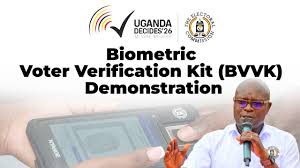
The Electoral Commission has procured over 109,000 Biometric Voter Verification Kits (BVVKs) to be deployed at all polling stations across the country. This measure is designed to confirm the identity of each voter using fingerprint and facial recognition technology before ballots are issued — reinforcing the constitutional principle of “one person, one vote.” The biometric data used in the verification process is matched against entries in the National Voters Register, which preloads voter information specific to each polling station.

According to the Commission’s official roadmap, the BVVKs do not record how a person votes — they are strictly identity verification tools to prevent impersonation and multiple voting. The system segments identity confirmation from ballot issuance, thereby protecting ballot secrecy while ensuring accuracy.
This marks a significant advance from past elections, where manual checks sometimes led to delays or discrepancies. Ahead of polling day, the Electoral Commission is conducting intensive training for BVVK operators and trainers, including demonstrations to Members of Parliament and civil society, aimed at ensuring officials handle the devices competently under field conditions.
One major clarification from the Commission is that registered voters do not need to present a National Identity Card (ID) or voter location slip to vote. As long as a person’s name appears on the National Voters Register of the polling station where they are registered, they are eligible to vote. The Commission emphasized that the BVVK and location slips are tools to speed up verification and enhance efficiency — not prerequisites that can deny someone their right to vote.
To further assist voters, the Commission has begun issuing voter location slips containing each voter’s photograph, personal details, and assigned polling station information. These slips have unique barcodes that can be scanned by BVVK devices on election day, helping officials quickly locate the correct voter information and reduce long queues. The rollout of these slips continues through early January 2026.
On polling day, the process will begin when a registered voter arrives at their designated polling station. Polling officials — including trained BVVK operators — will verify the voter’s identity using the BVVK’s biometric system. Once identity is confirmed through a fingerprint or facial scan, the voter is handed a paper ballot and directed to a private booth to make their selection. This process is deliberately designed to maintain the secrecy of the ballot while bolstering confidence in the legitimacy of voter identity.
After marking their ballot, voters deposit it in the ballot box. Since ballots are counted manually after polls close, voters are reminded to mark their ballots clearly and correctly to avoid invalidation at the counting stage.
Despite the Commission’s efforts, questions have emerged around the practical deployment of biometric technology in areas with limited electricity or network coverage. Some stakeholders, including political figures, have expressed concerns that technical failures could disrupt voting or disenfranchise rural voters. The Commission maintains that sufficient training, backup procedures, and offline capabilities of the BVVKs will mitigate such risks.
In public demonstrations and stakeholder trainings, EC officials have reiterated their commitment to transparency, offering hands‑on sessions and clear guidance on how the BVVKs operate. These efforts are part of a broader campaign to build trust in the electoral process and reassure voters that the new system enhances credibility without compromising accessibility.
Also read: <strong>Enhancing Skills and Employability through Uganda’s TVET System</strong>
Read via: mrupdates.com